
Newsletter - February 2026
Welcome Back from Reading Week! Hope everybody had a wonderful break and all of you are energised to face the rest of the semester!
We hope you had a chance to visit the beautiful Distillery District Winter Village and had some delicious hot chocolate! If you were in Toronto for the winter break, then you’ve probably faced your first Toronto Winter, your first Toronto Blizzard, and have experienced how quickly it goes from snowy winter day to a dreary humid rainy day! On a more serious note, the Winter semester is characterized by minimal sunlight and cold weather, so taking plenty of Vitamin D and Vitamin C is essential. If you do get sick don’t be afraid to go to your nearest walk in clinic and get a diagnosis and/or prescription (Did you know that UofT has it’s own medical centre where students and faculty can make appointments and meet a family doctor? Look up UofT Health & Wellness Centre).
If the previous semester went well, congrats! You juggled multiple assignments, deliverables, team meetings, managed your time, and came out successful!
If not, don’t worry! It’s not the end of the world! If you didn’t get the grades you wanted, then hopefully you’ve reflected on your previous semester and now know what to work on and what pitfalls to avoid. Learning from your mistakes and working to improve yourself is a lifelong endeavour and essential to succeeding as an engineer! If you’re facing issues with probation status, talk to your academic advisor as soon as you can! They want what’s best for you and are trained to advise on the best course of action. In addition, schedule an appointment with an Immigration Advisor at CIE to understand what your situation means for your study permit and how best to adhere to IRCC rules and regulations (read more about them below!).
Whatever the situation, we wish you an excellent winter sem at UofT Engineering!
The Centre for International Experience offers a variety of services to aid international students, and to improve the global experience of all students. For the international students, the most important relevant help that the CIE provides is immigration advising and resources. There are quite a few resource with checklists and various information related to immigration. The most useful of them is the ability to set up a one-on-one meeting with an International Student Immigration Advisor (ISIA).These are people who are trained and informed on Canadian Immigration regulations, and they can help you navigate the maze that is IRCC regulations. Always keep in mind that certain strategies that your domestic friends may be trying may not be feasible for you since you’ll probably be violating the terms of your work permit. Eg. Domestic Students (don’t take my word for it. I may be wrong) (as far as I am aware) can take gap years and enroll and disenroll from university and work as much as they want. For international students with study permits, we’re not allowed to work more than a certain amount during Fall and Winter semester times. You must be “actively enrolled” (ask the ISIAs what this means) during Fall
Interview Feature
And now for our International Student Interview! And the one being interviewed is: Me!
You’re very own Skule ITD Research Director was graciously interviewed by our Director Nidhi (Shout out to Nidhi for all the work she does!). On to the interview…
Alam is an Electrical Engineering student in his fourth (and final!) year of undergraduate study. He is an international student originally from Bangladesh, and did most of his schooling in Riyadh, Saudi Arabia. Alam did his PEY at AMD at their Markham office. He is looking forward to working in chip design post graduation.
Alam is currently the research director at International Transition. He has been a part of the Skule International Transition Directorship (ITD) for the past three years and has been witness to its evolution.
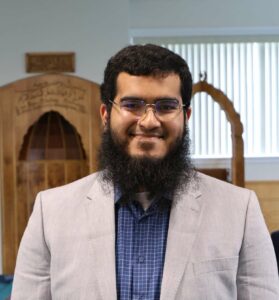
- What inspired you to join ITD?
As a new international student, I faced many challenges in adjusting to life in Canada and at university. At the time, I had to navigate through issues myself without any guidance. I was aware of ITD generally, but I did not have an opportunity to interact with them. Given the chance to join the directorship, I was excited to be able to provide that support for future international students with my knowledge and experience!
2. What would you like to see as an outcome of this PD in the future?
I really want to see ITD as a staple part of the international students’ vocabulary. I remember one of my friends from Mineral Engineering remarking ‘where was this when I was in first year?’ I would love for ITD to be a serious directorship that students can benefit from, and an uptick in the services and resources we offer.
3, How about your own experience as an international student? How has extracurricular involvement contributed to it?
I started getting involved with extracurricular activities on my second year, when I was a magazine writer for the Canadian Association of Food Engineers (CAFE). I have also been a part of the UofT Freelancers Club, which was geared at people interested in web development.
I can definitely see why some international students are hesitant to branch out from academics. There is a lot of pressure, both social and individual, to succeed in a program in a foreign country. Unfortunately, that means participating in clubs and such becomes a lesser priority, but in my experience there are very tangible pros. One of the biggest benefits is meeting people from diverse backgrounds and experiences. One time I went on a cottage trip with some of the friends I had made through a club activity, and in fact, end up becoming roommates with one of them! It was also very beneficial to my worldview, and contributed to having a truly global experience.
4. Any advice for getting through the homesickness?
The first realization I had was how different the university experience was to school. Not only that, but also the realization that I had to manage by myself, without family and friends near me. I had originally moved from Riyadh to Bangladesh, and then to Canada. The entire process was quite stressful, and added to the anxiety of the transition to university. What really helped me was making a lot of friends, who became a solid support network. Toronto is a very diverse, multicultural city, so I was also able to find Bangadeshi cuisine (even better than in Riyadh!) that fulfilled some of my cravings for authentic Bengali food. I call my mom and dad every couple of days, and stay updated about the news from back home. Feeling homesick is quite inevitable, and to some extent you just have to power through, but my advice is to look at the future you are building, rather than the history you left behind!
Thank you to Alam for telling us about his experiences as an international student. We wish him the best of luck in his journey ahead!
Thank you Nidhi! Stay tuned for more interviews, everybody!
And that brings us to the end of our Monthly newsletter! We wish you a great month of January, and may semester be great!